
Compact fluorescent light bulbs cost more off the shelf, but they'll save you money and time in the long run, and help the planet. Here's how the math pencils out.
I regularly mention using compact fluorescent lights for the home, but I haven't laid out the entire case for CFLs in one place before. It's time to change that.
Below are five huge reasons why you should switch your home light bulbs to CFLs today. (Even if you already use CFLs, you may want to read this list. There's something on it for you, too.)
For this exercise, I'm going to refer to a six-pack of General Electric 26-watt CFLs, which you can get from Walmart.com for $15.16, giving them a cost of $2.53 a bulb. These bulbs claim 100-watt equivalence, but I actually find their brightness to be between that of a 75-watt and a 100-watt incandescent bulb, so we'll compare them to 75-watt bulbs. For comparison's sake, a four-pack of GE's 75-watt incandescents at Amazon.com is $4.10, or $1.03 a bulb.
1. The bulbs themselves are cheaper.
2. The per-hour cost of energy for CFLs is cheaper.
3. The time involved is less.
4. They cut carbon emissions.
5. You can save $1 on a GE CFL during July 2007.
Article by: The Simple Dollar
For full article
Showing posts with label how to save energy. Show all posts
Showing posts with label how to save energy. Show all posts
Friday, August 29, 2008

Sunday, July 20, 2008
51 Things We Can Do to Save the Environment
 Can one person slow global warming? Actually, yes. You—along with scientists, businesses and governments—can create paths to cut carbon emissions. Here is our guide to some of the planet's best ideas.
1.Turn Food Into Fuel
By Alice Park
Are corn husks better than corn for producing energy? Ethanol is the alternative fuel that could finally wean the U.S. from its expensive oil habit and in turn prevent the millions of tons of carbon emissions that go with it. The Department of Energy has doubled its 2005 commitment to funding research into biofuels—any non-petroleum fuel source, including corn, soybean, switchgrass, municipal waste and (ick) used cooking oil. Already, half of the nearly 11 billion bushels of corn produced each year is turned into ethanol, and most new cars are capable of running on E10 (10% ethanol and 90% gas).
Yet the eco-friendly fuel is beginning to look less chummy of late. Some of the 114 ethanol plants in the U.S. use natural gas and, yes, even coal to run the processors. And ethanol has to be trucked. Existing gas pipelines can't carry it because it corrodes iron. Then there are the economics. Producers depend on federal subsidies, and increasing demand for corn as fuel means the kernels keep getting pricier.
That's why researchers are prospecting for more alternatives, preferably ones that don't rely on food crops or a 51 cents-per-gallon tax break. Municipal waste, wood pulp and leftover grain and corn husks are all quite attractive; they can produce something called cellulosic ethanol, which contains more energy than corn. But they don't give up their bounty easily, so for now they're more expensive than corn-based ethanol to produce. Undeterred, researchers at several cellulosic-ethanol plants are developing innovative enzyme concoctions and heating methods to make the process more economic. Nothing like haste to make something out of waste.
2. Get Blueprints For a Green House
By Laura Locke
Reducing your impact on the earth is not just a question of what you drive but also of what you live in. Residential energy use accounts for 16% of greenhouse-gas emissions. If you begin thinking green at the blueprint stage, however, low-tech, pragmatic techniques will maximize your new home's efficiency. Installing those systems from the ground up is cheaper than retrofitting. "Doing simple things could drastically reduce your energy costs, by 40%," says Oru Bose, a sustainable-design architect in Santa Fe, N.M. For example, control heat, air and moisture leakage by sealing windows and doors. Insulate the garage, attic and basement with natural, nontoxic materials like reclaimed blue jeans. Protect windows from sunrays with large overhangs and double-pane glass. Emphasize natural cross ventilation. "You don't need to have 24th century solutions to solve 18th century problems," Bose says. Next, consider renewable energy sources like solar electric systems, compact wind turbines and geothermal heat pumps to help power your home. When you're ready to get creative, GreenHomeGuide.com will help you find bamboo flooring, cork tiles, and countertops made from recycled wastepaper.
To Read the rest of the article, http://www.time.com/time/specials/2007/environment/
How you can create less trash..
# Buy items in bulk from loose bins when possible to reduce the packaging wasted.
# Avoid products with several layers of packaging when only one is sufficient. About 33 of what we throw away is packaging.
# Buy products that you can reuse.
# Maintain and repair durable products instead of buying new ones.
# Check reports for products that are easily repaired and have low breakdown rates.
# Reuse items like bags and containers when possible.
# Use cloth napkins instead of paper ones.
# Use reusable plates and utensils instead of disposable ones.
# Use reusable containers to store food instead of aluminum foil and cling wrap.
# Shop with a canvas bag instead of using paper and plastic bags.
# Buy rechargeable batteries for devices used frequently.
# Reuse packaging cartons and shipping materials. Old newspapers make great packaging material.
# Compost your vegetable scraps.
# Buy used furniture - there is a surplus of it, and it is much cheaper than new furniture.
Source:http://www.seql.org/
ways to use less water...
# Check and fix any water leaks.
# Install water-saving devices on your faucets and toilets.
# Don't wash dishes with the water running continuously.
# Wash and dry only full loads of laundry and dishes.
# Follow your community's water use restrictions or guidelines.
# Install a low-flow shower head.
# Replace old toilets with new ones that use a lot less water.
# Turn off washing machine's water supply to prevent leaks.
consumption of water efficient is an important issue in saving the environment.
Wednesday, June 25, 2008
Air conditioning your home
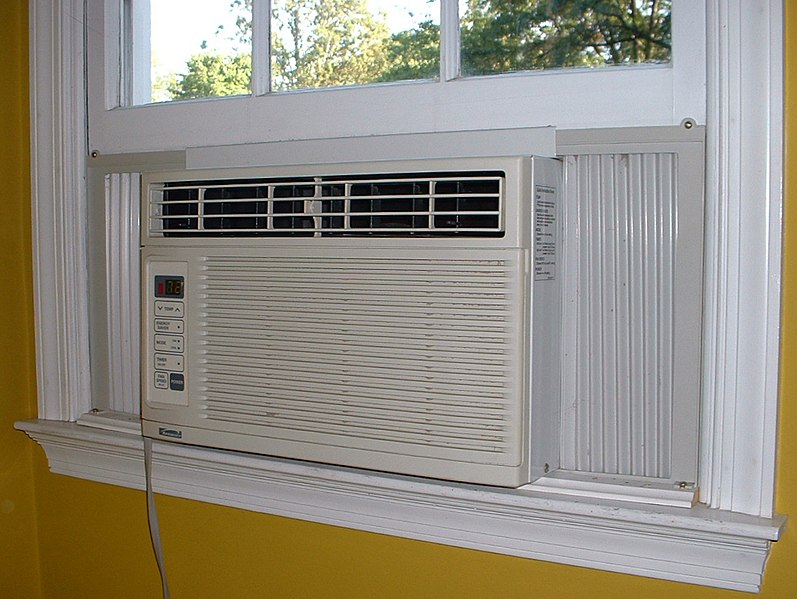
01. Maintain your central air conditioner by cleaning the outside compressor with a garden hose (be sure to shut off power at the fuse or breaker first). Keep plantings at least one foot away for adequate airflow.
02. During late afternoon and early evening, turn off unnecessary lights and wait to use heat-producing appliances. It's also a good idea to shade south- and west- facing windows during the hottest part of the day.
03. Plant a tree. One well-placed shade tree can reduce your cooling costs by 25 percent. For maximum benefit, place leafy shade trees to the south and west, and evergreens to the north.
04. Use ceiling fans to help circulate air throughout the house, and make sure your attic is properly ventilated. A ceiling fan should run clockwise during the summer, and counter-clockwise during the winter.
05. Set the fan on your central air conditioner to "on" rather than "auto." This will circulate air continuously, keeping the temperature more even throughout the house and aiding in dehumidification.
06. Make sure your window air conditioner is the proper size. It's better to get one that's too small than too large - a larger unit will start up and turn off more frequently and won't do as good a job dehumidifying the air.
07. Don't judge the efficiency of your air conditioner by the sound of the fan shutting on and off. The blower will continue to circulate cooled air throughout your home up to 15 minutes after the compressor has stopped. (The same holds true for the furnace.)
08. Raise the thermostat to about 78 to 80 degrees whenever you go to bed or leave the house. A programmable thermostat will do this for you automatically.
09. If your home can't accommodate central air conditioning, try a whole-house attic fan. This device pushes hot air out through attic vents, lowering the temperature throughout your home about five degrees in less than ten minutes. Attic fans cost less than 25 cents per day to operate.
10. During the winter, remove window air conditioners and seal the windows with caulk and weatherstripping. You might also want to cover the central air compressor with a tarp to keep it clean.
Source: http://www.alliantenergygeothermal.com
Tuesday, June 24, 2008
Electricity

Don't Heat - or Cool - the Great Outdoors!
Americans use twice as much energy as necessary to heat their homes. That accounts for a lot of wasted energy!
If you have a fireplace, close the damper when you don't have a fire burning. An open fireplace damper can let 8 percent of heat from your furnace escape through the chimney! In the summer, an open fireplace damper can let cool air escape. It's like having a window open!
Make a map of your home, and mark all the windows, heating vents, and outside doors. Take a ribbon and hold it up to the edges of the doors and windows. If the ribbon blows, you've found a leak! Ask Mom or Dad to seal the leak with caulk or weatherstripping.
Think about your curtains. Keeping the curtains closed on cold, cloudy days helps block the cold outside air from getting inside. Also, keeping the curtains closed on very hot days keeps the hot air out!
In the Bedroom
Turn off your electric blanket when you aren't in bed.
Don't leave on your computer, TVs, radios or games that use electricity when you're not using them.
In the Bathroom
Wasting water wastes electricity. Why? Because the biggest use of electricity in most cities is supplying water and cleaning it up after it's been used!
About 75 percent of the water we use in our homes is used in the bathroom. Unless you have a low flush toilet, for example, you use about five gallons to seven gallons of water with every flush! A leaky toilet can waste more than 10,000 gallons of water a year. Wow!
Drippy faucets are bad, too. A faucet that leaks enough water to fill a soda bottle every 30 minutes will waste 2,192 gallons of water a year.
Another simple way to save water AND energy is to take shorter showers. You'll use less hot water - and water heaters account for nearly 1/4 of your home's energy use.
In the Kitchen
According to researchers who are paid to study such things, a load of dishes cleaned in a dishwasher uses 37 percent less water than washing dishes by hand! However, if you fill up one side of the sink with soapy water and the other side with rinse water - and if you don't let the faucet run - you'll use half as much water as a dishwasher does. Doing the dishes this way can save enough water for a five-minute shower!
If you need to warm up or defrost small amounts of food, use a microwave instead of the stove to save energy. Microwave ovens use around 50 percent less energy than conventional ovens do. For large meals, however, the stove is usually more efficient. In the summer, using a microwave causes less heat in the kitchen, which saves money on air conditioning.
Don't keep the refrigerator door open any longer than you need to. Close it to keep the cold air inside! Also, make sure the door closes securely. There is a rubber-like seal around the door that you can test. Just close the door on a dollar bill, and then see how easy it is to pull out. If the dollar slides out easily, the door is probably leaking cold air from inside.
Is there an old refrigerator sitting in the garage or someplace else at home? Old refrigerators are real energy hogs! An old refrigerator could be costing your family as much as $120 a year to operate. Urge your parents to replace it if they don't need it, and remind them that one large refrigerator is cheaper to run than two smaller ones.
Don't Leave Things Turned On
Turn off the TV when no one is watching it. The same goes for computers, radios and stereos - if no one using it, turn it off. Turn off all the appliances at the surge protector/control strip - that four- or six-plug extension chord that you plug all your computer things into. Some devices, like modems or other networking boxes are drawing small amounts of power all the time. Check with your folks first, but the best thing to do is turn them ALL off at the surge protector.
Sunday, June 22, 2008
Energy Efficient Bulb

Compact Fluorescent Lights (CFL) and Light Emitting Diode (LED) bulbs have revolutionized energy-efficient lighting.
CFLs are simply miniature versions of full-sized fluorescents. They screw into standard lamp sockets, and give off light that looks just like the common incandescent bulbs - not like the fluorescent lighting we associate with factories and schools.
LEDs are small, solid light bulbs which are extremely energy-efficient. New LED bulbs are grouped in clusters with diffuser lenses which have broadened the applications for LED use in the home.
Benefits
Efficient: CFLs are four times more efficient and last up to 10 times longer than incandescents. A 22 watt CFL has about the same light output as a 100 watt incandescent. CFLs use 50 - 80% less energy than incandescents.
Less Expensive: Although initially more expensive, you save money in the long run because CFLs use 1/3 the electricity and last up to 10 times as long as incandescents. A single 18 watt CFL used in place of a 75 watt incandescent will save about 570 kWh over its lifetime. At 8 cents per kWh, that equates to a $45 savings.
Reduces Air and Water Pollution: Replacing a single incandescent bulb with a CFL will keep a half-ton of CO2 out of the atmosphere over the life of the bulb. If everyone in the U.S. used energy-efficient lighting, we could retire 90 average size power plants. Saving electricity reduces CO2 emissions, sulfur oxide and high-level nuclear waste.
High-Quality Light: Newer CFLs give a warm, inviting light instead of the "cool white" light of older fluorescents. They use rare earth phosphors for excellent color and warmth. New electronically ballasted CFLs don't flicker or hum.
Versatile: CFLs can be applied nearly anywhere that incandescent lights are used. Energy-efficient CFLs can be used in recessed fixtures, table lamps, track lighting, ceiling fixtures and porchlights. 3-way CFLs are also now available for lamps with 3-way settings. Dimmable CFLs are also available for lights using a dimmer switch.
Subscribe to:
Posts (Atom)


